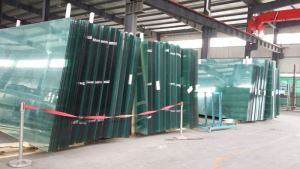
A new type of building material that integrates power generation, sound insulation, heat insulation, safety and decoration functions, fully embodies the intelligent and humanized characteristics of the building, this is - solar photovoltaic curtain wall glass.
After entering the 1990s, with the rising cost of conventional power generation and people's increasing emphasis on environmental protection, some countries have implemented and promoted solar roof plans and proposed a new concept of "building energy generation", thus promoting photovoltaic technology. large-scale development and application. The United States, Japan, Germany, Italy, India and many other countries have built buildings with solar roofs or facades. Currently, the world's largest solar rooftop photovoltaic system is installed at the new Munich trade fair center. The system consists of 7,812 Siemens monocrystalline silicon modules, each with a power of 130W and a total capacity of more than IMW. The power generated is connected to the 20KV power grid and can generate 1 million KWH per year, enough for 340 German households.

At present, the application of photoelectric technology is mainly reflected in the application of photoelectric curtain wall. The so-called photoelectric curtain wall is to use special resin to paste the solar cell on the glass and inlay between the two pieces of glass, and the light energy can be converted into electric energy through the battery. In addition to the main function of power generation, the photovoltaic curtain wall also has obvious functions such as heat insulation, sound insulation, safety, decoration, etc. In particular, solar cell power generation does not emit carbon dioxide or produce gases that are harmful to the greenhouse effect, and there is no noise. It is a kind of Net energy and good compatibility with the environment. However, due to the relatively high price, photoelectric curtain walls are now mostly used for the roofs and exterior walls of landmark buildings.